
How Long Does GHB Stay in Your System?
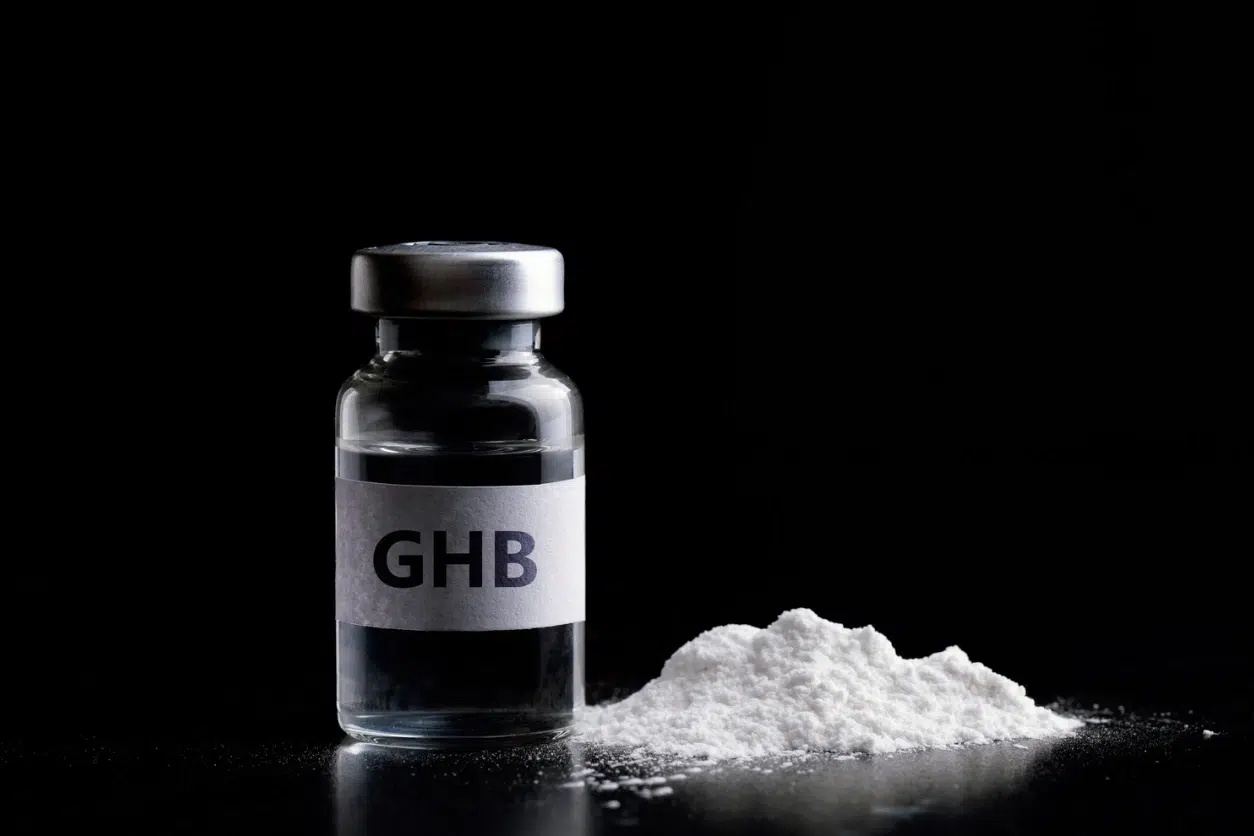

How long does GHB stay in your system? The effects of GHB can be felt quickly, and it clears the body faster than many other drugs, making it unlikely to be picked up by typical drug tests after a day or so.
If you’re asking this question, it’s important to know how long GHB is detectable by different types of drug tests, what factors can affect this and what the risk of using the drug is.
GHB is a drug with a reputation. A party drug, but also one that is predominantly known as a date rape drug, GHB is a powerful central nervous system depressant.
GHB stands for gamma-hydroxybutyrate. It is the metabolite of the neurotransmitter we naturally produce called GABA. This is an inhibitory neurotransmitter; it slows down brain activity and makes people feel calm and relaxed. Because of this, it was initially used as an anaesthetic in medical settings.
Now it is used recreationally. People use it to experience the euphoria doses can produce, feel more relaxed and reduce inhibitions.
GHB is a controlled substance in the UK, moving from a Class C to a Class B drug in 2021 due to the dangers of the drug. One of the biggest dangers of the drug is a narrow margin between a “safe” dose and taking too much. It is incredibly easy to overdose on GHB because you only need to take a small amount to feel the intended effects.
GHB has a particularly short half-life of around 30 minutes to an hour. That means that within an hour, 50% of GHB has been eliminated from your body.
GHB is typically swallowed as a liquid, so it enters the bloodstream through your stomach and intestines. It then passes through to the organ that is most responsible for metabolising GHB, your liver.
In the liver, the substance is broken down to become carbon dioxide and water that you either breathe out or eliminate. A small percentage of GHB leaves your body through the kidneys, coming out as urine, which is why it can be hard to detect with typical workplace drug tests.
We’ve talked about GHB’s short half-life, which means that it doesn’t stay in your system for long. Compared to other recreational drugs that are routinely tested, GHB is metabolised quickly, meaning that if a test is performed for the drug, it needs to happen at the right time.
How long GHB is detectable in your system will depend on the sample used, and these samples can depend on several other factors, which we will explore more afterwards.
GHB is only detectable in your blood for a few hours after taking it, roughly around 8 or so.
GHB is detectable in your urine for a slightly longer window. Urine screens can pick up GHB for up to 12 hours, but it becomes undetectable afterwards.
Testing hair follicles for GHB is the most effective test. Levels are present in your hair for up to a month after using the substance, which is why it is the chosen test method for people who believe they have been spiked with GHB.
These windows of detection are not set in stone. They are at the mercy of many possible deliberate and natural factors.
If you use higher doses of GHB as your tolerance builds, it takes longer for your liver to process it, meaning the drug stays in your system longer. If you do not take larger doses but more frequent ones, GHB remains in your system over a longer period.
If you have a fast metabolism, your body is more efficient at processing substances like GHB. That can also work against you if you have a slow metabolism.
Weight can also play a role, as people tend to take doses in relation to their weight. A heavier person may take more GHB, but it will be more distributed, leading to a decreased concentration in the body.
Combining GHB with substances like alcohol can cause it to remain in your system longer, as alcohol disrupts the metabolism of GHB. When combined with other depressants, you open yourself to greater health risks like increased sedation and respiratory depression.
Using GHB on a full stomach can impact how long it stays in your system too, as this can delay absorption, causing it to linger.
The major risk of GHB is that the margin between a “safe” dose and overdosing is incredibly narrow. An overdose is a serious medical emergency and can cause you to:
If you combine GHB with alcohol, this can produce many negative effects, even in small doses. Together, the depressive effects are amplified, making you more sedated and intoxicated, which could cause you to pass out, get into an accident or fall victim to a crime like sexual assault.
In the long term, chronic GHB use can affect your cognitive function, causing memory problems, attention issues and increasing the risk of mental health struggles.
Though GHB has a rapid half-life, if you become addicted, the substance can be hard to shake off. Studies have found that GHB withdrawal requires specialised detoxification, and attempting it at home can be dangerous. You should seek out professional supervision if you are ready to stop using GHB.
Entering a professional addiction treatment programme is recommended if you wish to end your GHB dependence. By going through a structured programme, you can undergo treatment in a setting that is safe, surrounded by expert staff who are qualified to help you.
A drug rehab can give you access to intensive and effective treatments and therapies that help not only end your physical dependence but also allow you the tools to deal with the underlying issues.
At rehab, your withdrawal can be managed safely, you can be medically assessed to find the best path forward and start recovery with help, rather than trying to attempt it alone.
GHB acts rapidly and can be cleared from your system quicker than other recreational drugs. Whilst not always picked up by standard drug tests, it is still detectable in your blood, urine and hair for longer than you might think.
GHB is a dangerous drug and medically supervised support is crucial if you are worried by your use. Talk confidentially to the team at Ocean Recovery today for advice on GHB use or dependence.



John Gillen
- Author
- Last updated: September 4, 2026

John is one UK’s leading professionals in the addiction recovery industry. Pioneering new treatment techniques such as NAD+ and ongoing research into new therapy techniques such as systematic laser therapy, John is committed to providing the very best treatment for people throughout the UK and Europe. During his extremely busy schedule, John likes to regularly update our blog section with the latest news and trends in the industry to keep visitors to our site as well informed as possible on everything related to addiction treatment.
Rehab In Northern England

Google Reviews
4
Rehab in Greater London


Google Reviews
4.5
Rehab in the Midlands


Google Reviews
4
You might have heard of a type of drug commonly known as spice that has become increasingly prevalent in the UK. It’s gone from being called a ‘legal high’ to a strictly controlled Class B drug, and people often misunderstand its effects and potential risks. Because it’s a synthetic cannabinoid, it is sometimes compared to
We are in an age where there is a striving for perfection. Maximise your day, your health, how you look. With the constant presence of social media and celebrity culture, normal people, but men especially, have sought out drugs such as steroids to improve their image, performance and ability in sport. There were nearly one
Yes, lorazepam is a controlled drug in the UK. Lorazepam is a benzodiazepine that is sometimes used to treat anxiety and related sleep problems, as well as being used as a pre-med before operations and other medical procedures. Restrictions exist because benzodiazepines, including lorazepam, can be misused and can also cause dependence and addiction.
Monkey dust is a synthetic drug that has received significant media attention in the UK in recent years. Headlines such as “The drug that makes people jump off buildings” and “Monkey dust like ‘dancing with the devil’” have often created confusion about what the drug actually is and how it affects users. While some outlets
People in Britain are huge users of over-the-counter (OTC) painkillers. Last year, we approximately spent £865m on them, the highest amount on record. We use them because they work and, for most people, they are considered safe medicines that can be purchased without a prescription. Whilst most OTC painkillers are used responsibly by those who

Ketamine is sometimes used in controlled medical settings, but long-term or repeated use outside of supervision can have significant effects on the brain and body. As ketamine misuse has grown, so has an awareness of the potential ketamine misuse risks on both brain and body. This article will take a look at some of the
Cocaine can have a number of risks, including the possibility of overdose and the risk of addiction. One issue you might not be familiar with is the risk of cocaine cardiomyopathy. What is Cocaine Cardiomyopathy? Cocaine is a potent stimulant associated with the development of numerous cardiovascular issues, including dysrhythmias (abnormal heartbeat) and hypertension (high
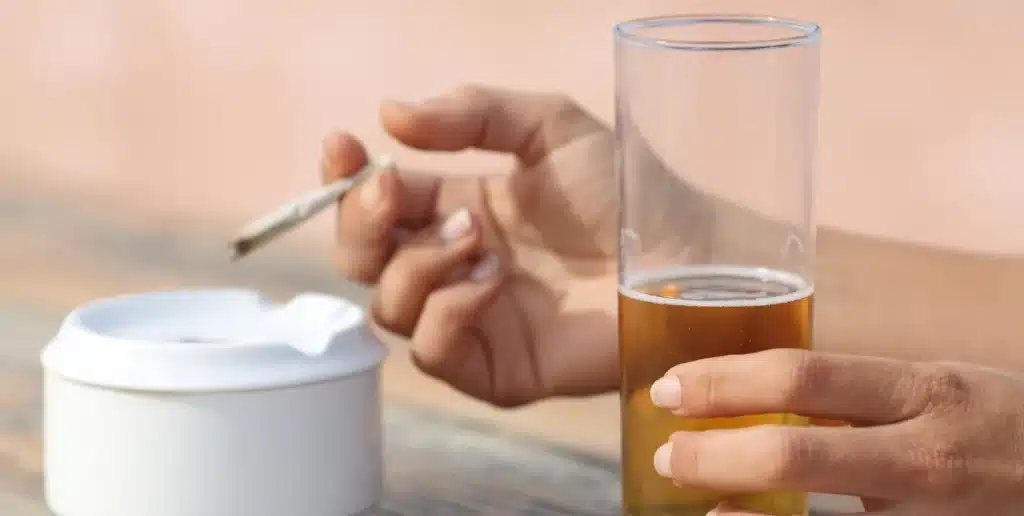
Cannabis is becoming more socially and legally acceptable around the world. And with alcohol already a staple in many social settings, many people find themselves using the two substances together. Although this might seem like a harmless combination, it can actually result in various unexpected and dangerous outcomes. Here, we look at the risks of
